
The One-Sentence Answer
If your garage shares a wall with living space, or you actually spend time out there, insulation is worth paying for; if it's a detached box for parking and storage, you're buying an R-value you'll never feel.
That's the rule of thumb. Now here's where it gets more complicated, because in this part of Florida there's a second reason to care about an insulated door that has nothing to do with temperature at all.
What R-Value Actually Measures
R-value measures how well a material resists heat transfer. A basic single-layer steel door has essentially no insulation value — it's just a sheet of metal, so heat passes through it almost as fast as it hits it. Double-layer doors add a layer of polystyrene insulation behind the steel, usually landing somewhere in the R-6 to R-9 range. Triple-layer doors sandwich steel around injected polyurethane foam, which bonds to both skins and can push R-value up toward R-12 to R-18+, depending on the manufacturer.
Higher R-value means the garage interior stays closer to outdoor-neutral instead of swinging wildly hot. That matters a lot more here than it would somewhere with a real winter, because in Flagler County the issue almost never heating — it's keeping a west-facing steel door from turning the garage into an oven during a long, humid summer.
When Insulation Earns Its Keep
- The garage shares a wall with a bedroom, laundry room, or living space. An uninsulated door radiates heat straight through that shared wall, and your AC spends extra effort fighting it.
- Ductwork, a water heater, or an AC air handler lives in the garage. Those components run less efficiently in a space that bakes all afternoon.
- The door faces west or gets direct afternoon sun. Afternoon sun plus a dark-colored steel door is a reliable way to turn a garage into a sauna by 4 p.m.
- You use the garage as a workshop, home gym, or hangout space. Comfort is the whole point here, and insulation is the cheapest way to buy it.
- You want a quieter door. The foam core dampens vibration and rattle, which matters if the garage sits under a bedroom.
When You're Paying for Nothing
- The garage is detached from the house with no shared walls or ductwork.
- It's used purely for parking and storage, and nobody spends meaningful time in there.
- The door rarely sees direct sun, or the garage already stays relatively cool due to shade or orientation.
- You're chasing insulation to solve a moisture or rust problem — it won't, and that's the next section.
The Hurricane-Season Wrinkle
Here's the part that changes the argument for coastal Florida homeowners specifically. Insulated doors are almost always built as double- or triple-layer steel sandwiches, and that layered construction is inherently stiffer than a single thin steel panel. That extra rigidity is exactly what helps a door meet wind-load requirements for coastal construction. So even if you don't care one bit about temperature, you may end up choosing an insulated door anyway, because the construction that gives you R-value is the same construction that gives you better resistance to wind pressure and flying debris during storm season. In that sense, some homeowners pay for insulation as a side effect of buying wind-rated strength, not the other way around — and that's a legitimate reason to spend the money even in a detached, unconditioned garage.
What Insulation Doesn't Fix
It's worth being blunt about this, because it's the most common point of confusion. Insulation does not stop rust from salt air, and it does not stop a door from swelling or sticking in humid weather. Those problems come from the steel coating, the weatherstripping, and the hardware finish — not the foam core. A high R-value door with cheap, uncoated hardware will still corrode on a salt-exposed property. Likewise, afternoon downpour water intrusion around the bottom seal or side tracks is a weatherstripping and alignment issue, not an insulation issue. Don't let an insulated-door upgrade substitute for proper seals, galvanized hardware, or routine maintenance — they solve different problems.
The Practical Checklist Before You Decide
- Walk into the garage and put a hand on the wall that's shared with the house (if any). If it's warm to the touch on a hot afternoon, insulation will help.
- Check whether any AC ductwork, the water heater, or the air handler is located in the garage.
- Note which direction the door faces and whether it gets several hours of direct sun.
- Be honest about how the space is actually used — storage only, or somewhere people spend time.
- If you're in a coastal wind zone, ask about wind-load rating separately from R-value; they're related but not the same spec.
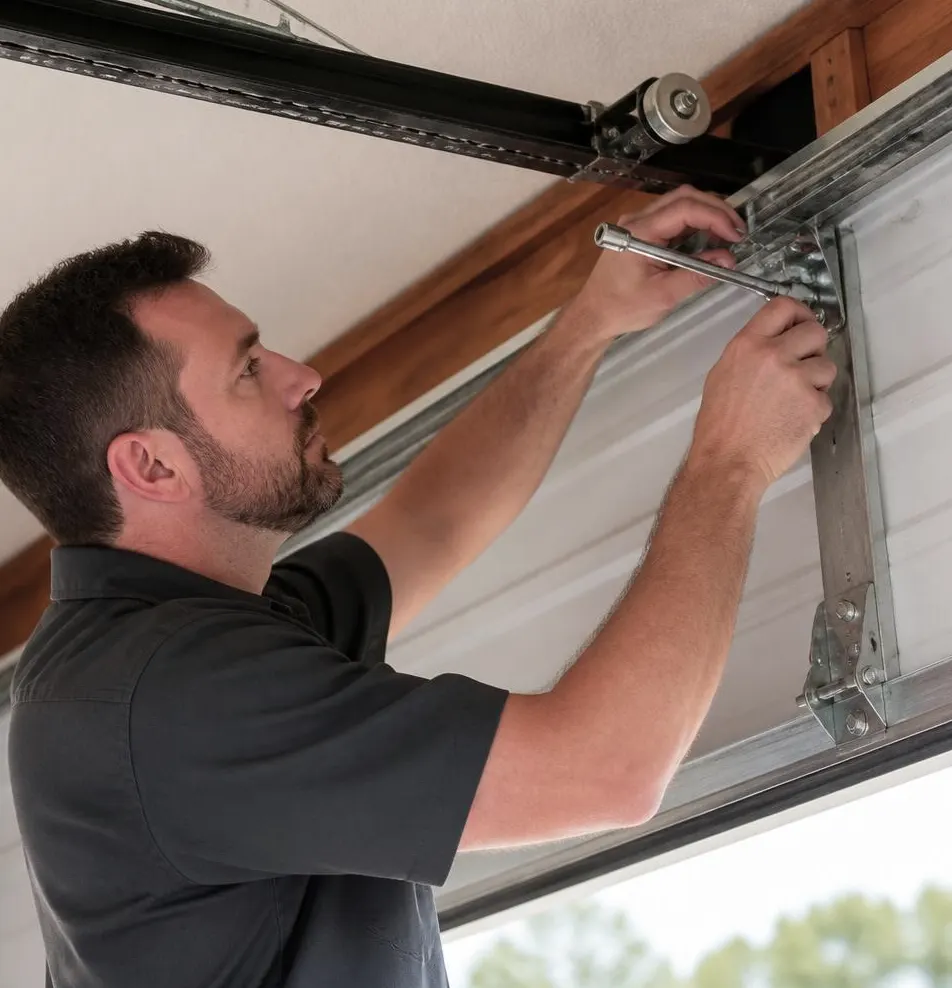
One more practical note: insulated doors are heavier than single-layer steel. If you're upgrading an existing door, the springs and opener sized for the old, lighter door usually aren't correctly rated for the new one. That's not optional — it's a safety and performance issue, not a preference.
When to Call Flagler Beach Garage Door
If you're weighing an insulated upgrade, it's worth having someone look at the door and opener together before you buy anything. We handle Garage Door Installation for homeowners switching from a basic single-layer door to an insulated one, and we always check whether the existing springs and opener can handle the added weight — if not, that's where Spring Replacement comes in, sized correctly for the new door from the start. We also do straightforward Preventive Maintenance visits if you just want an honest read on whether your current door's real problem is heat, humidity, rust, or something mechanical, before you spend money solving the wrong one.
If you're in Flagler Beach, Palm Coast, Bunnell, or anywhere along this stretch of coast and you want a straight answer on whether an insulated door makes sense for your garage, give Flagler Beach Garage Door a call — we'll look at your actual setup, not just sell you a number on a spec sheet.