
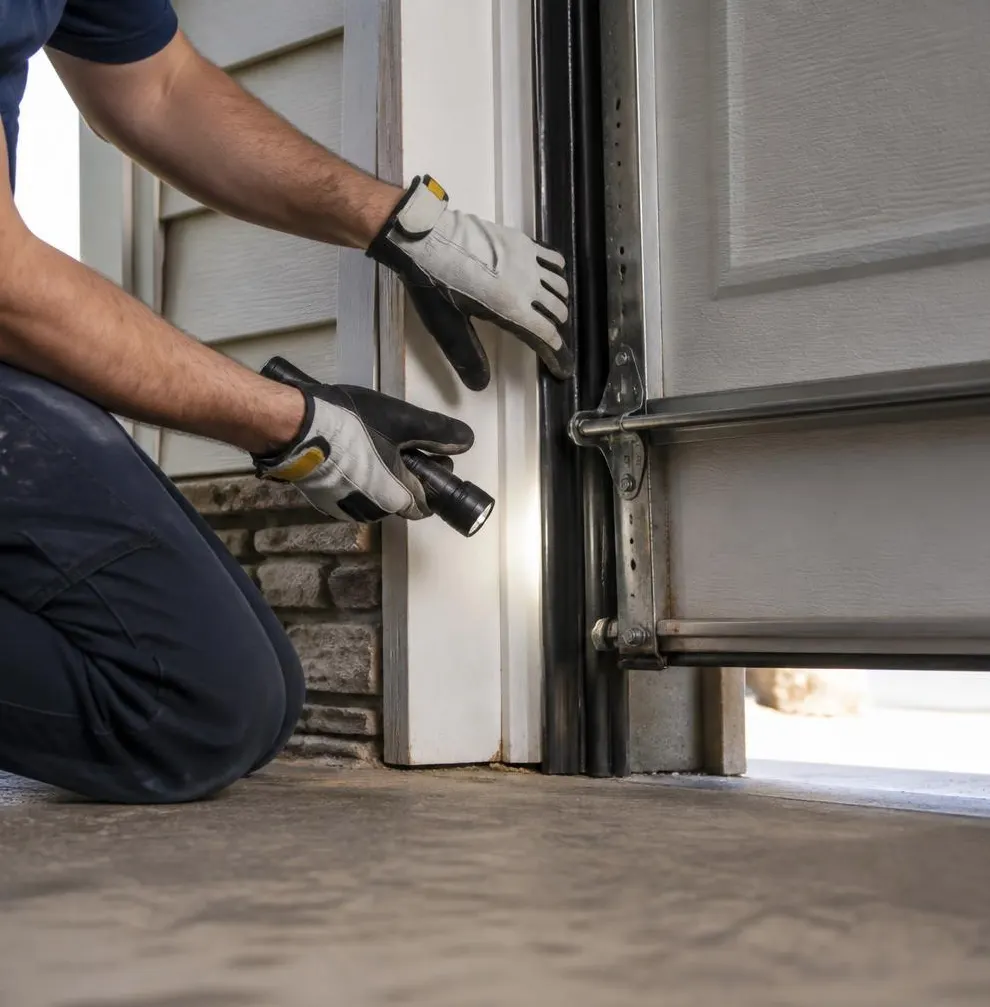
The Groan You Hear on the First Cool Morning
It happens almost every year around this time. You hit the opener button on a chilly November morning, and instead of the usual smooth roll, the door hesitates, groans, or jerks partway up before catching itself. By afternoon, once the sun has warmed the garage back up, it seems to work fine again. That stop-and-start behavior isn't your imagination, and it isn't something to shrug off until it gets worse.
After months of heat, humidity, and daily afternoon downpours, your garage door hardware has been swelling, flexing, and fighting rust all summer. Now that the air is drier and temperatures swing more between morning and afternoon, metal parts contract and expand differently throughout the day. Springs tighten slightly in the cold, cables that were already fraying from salt exposure become more brittle, and any rust that got a foothold during hurricane season starts showing up as stiff hinges and squealing rollers. This is the season to catch those problems before they turn into a door that won't open at all.
Why This Time of Year Matters Here
Flagler Beach doesn't get a hard freeze, but it does get real temperature swings between a 50-degree morning and a 75-degree afternoon. That daily expansion and contraction puts stress on hardware that's already compromised by months of salt air and moisture. It's also the tail end of hurricane season, which means this is a good time to check whether your door's wind-load hardware held up and whether any storms left hidden damage you haven't noticed yet. Think of it as a transition checklist: closing out storm season and prepping for the drier, cooler months ahead.
What to Inspect
- Springs and cables — Look for rust flaking off the springs or cable strands that look frayed near the bottom bracket. Cold mornings make brittle cables more likely to snap under tension. Don't touch the springs themselves, but do look.
- Rollers and hinges — If the door is noisier than usual or seems to stick at certain points on the track, the rollers or hinge pins have probably picked up surface rust from the humidity. A light coat of silicone-based lubricant (not WD-40, which attracts dust) on rollers, hinges, and the track itself can quiet things down fast.
- Weatherstripping — Check the rubber seal along the bottom of the door and around the sides. Months of heat and UV exposure crack and harden it, and once it's brittle, it stops keeping out wind-driven rain. Replacing it now, before winter storms roll through, is a cheap fix that prevents water intrusion later.
- Track alignment — Run your hand along the tracks (with the door closed and power to the opener disconnected) and feel for gaps between the rollers and the rail, or any spot where the track looks bent or pulled away from the wall. Afternoon downpours followed by sun exposure can warp tracks over time, and a misaligned track is often what's really behind that groaning sound.
- Opener and sensors — Test the auto-reverse feature by placing a block of wood in the door's path and closing it. If the door doesn't reverse immediately, the safety sensors need attention. Also check that the sensor eyes near the floor are clean; salt residue and dust build up on the lenses and can cause false readings.
- Hardware fasteners — Humidity swings loosen bolts and brackets over a season. Go around with a wrench and snug up anything that's shifted, especially where the track mounts to the frame.
What You Can Handle Yourself, and What You Shouldn't
Lubricating hinges, cleaning sensor lenses, replacing weatherstripping, and tightening visible bolts are all reasonable weekend tasks. They take maybe thirty minutes and a trip to the hardware store. Spring tension, cable replacement, and anything involving the torsion system are a different story. A garage door spring holds enough stored energy to cause serious injury if it releases wrong, and after a season of rust and stress, a weakened spring is more likely to fail without warning. If you see rust, fraying, or gaps in the coils, that's not a DIY repair.
When to Call Flagler Beach Garage Door
If your door is sticking, grinding, or reversing unevenly even after basic lubrication, or if you spot rust and fraying on the springs or cables, it's time to call in a technician rather than wait to see if it gets worse. Our preventive maintenance visits cover exactly this kind of seasonal transition: we check spring tension, inspect cables and rollers for corrosion, realign tracks that have shifted from the summer's heat and rain, and make sure your opener's safety features are working correctly. If a spring has already deteriorated past the point of adjustment, our spring replacement service gets it swapped out with hardware rated for the wind and moisture conditions here, not generic parts that'll rust out again in a year.
Catching these issues now, while the door is still functioning, is a lot less stressful than dealing with a broken spring or a door stuck halfway open during the first real cold snap or late-season storm.
Ready for a Winter Check-Up?
If your garage door has been groaning, sticking, or just feels off since the weather turned, give Flagler Beach Garage Door a call. We serve Flagler Beach, Palm Coast, Bunnell, and the surrounding coastal communities, and we'll have your door running smoothly before winter settles in.