
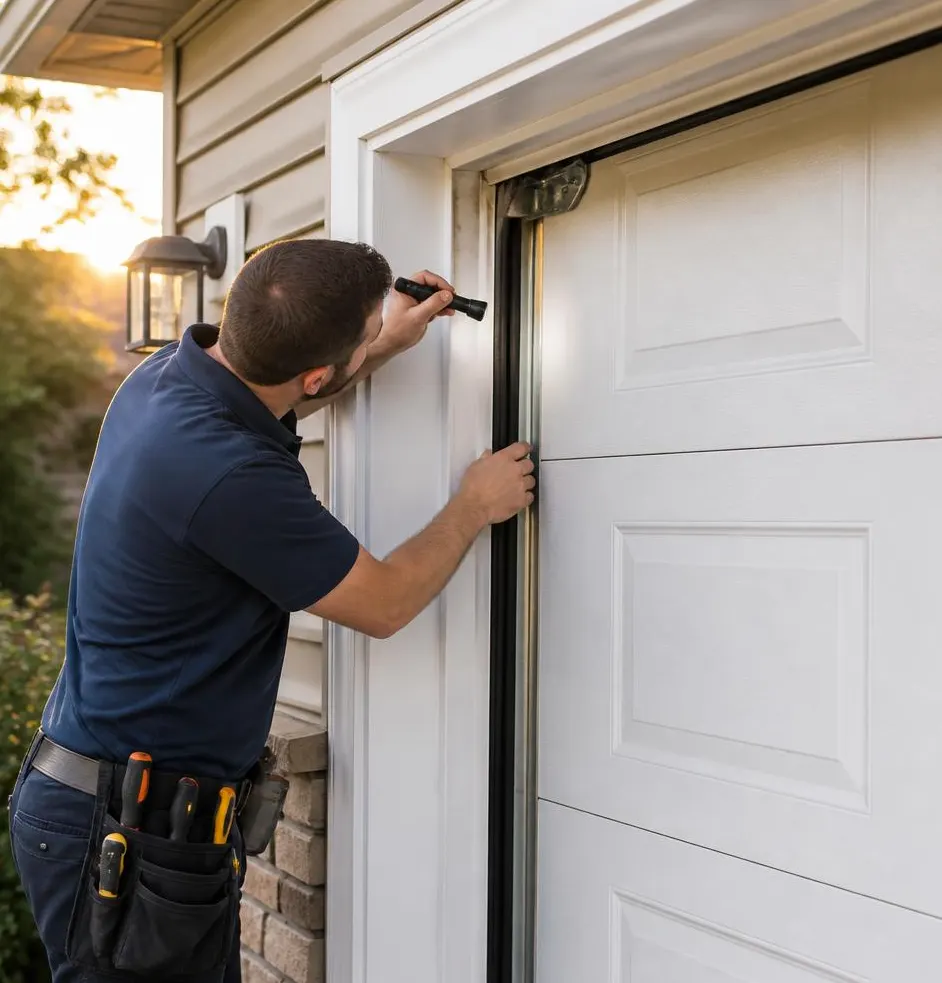
The Cost of Waiting One More Season
Here's the argument in a nutshell: one of you thinks the garage door is "just noisy" and can wait until after the holidays. The other one heard a pop, saw a frayed strand of cable, and wants someone out this week. One of you is closer to right, and it's not the one betting on the quiet route.
A worn roller left alone usually just gets louder and rougher until it seizes or cracks. A frayed cable left alone can snap. When it does, the spring-loaded door doesn't ease down — it drops, fast, with whatever weight that panel carries. If anyone is under it, in the doorway, or has a hand near the track when it lets go, that's not a repair bill anymore, that's an emergency room visit. So the cost of waiting isn't really measured in dollars. It's measured in what happens the one time you're wrong about how much life that cable has left.
What These Parts Actually Do
Garage doors look simple from the outside, but two unglamorous parts carry almost all the physical stress: rollers and cables.
- Rollers sit in the track and let the door glide up and down. They're small, they spin constantly, and most homeowners never think about them until one is grinding or has popped out of its track.
- Cables run from the bottom corners of the door up to the spring system. They're what actually hold the door's weight when it's raised and let the springs do their job safely. If a cable fails while the door is up, the opposite side drops unevenly, often bending the door or track on the way down.
Neither part is expensive or dramatic on its own. But they're the connective tissue between a working door and a door that fails suddenly, which is exactly why they deserve more attention than they get.
The Symptoms That Settle the Argument
Forget vague descriptions — here's what to actually look and listen for:
- Grinding, squeaking, or a rhythmic thunk as the door moves — usually a roller that's worn, cracked, or has flat spots.
- The door looks crooked or sags to one side when it's open or closing — often one cable stretching or fraying faster than the other.
- Visible rust or frayed strands on the cable near the bottom bracket — this is not a wait-and-see sign. Any visible fraying means the cable is actively failing.
- The door jerks or hesitates partway through its cycle — could be a roller stuck in the track or a cable starting to slip off its drum.
- A loud bang followed by the door refusing to move — this is often a cable that's already let go, or a spring that's taken the sudden extra load and failed too.
If you're seeing any of the middle three, the right answer is this week, not next season.
Why This Area Shortens the Timeline
In most of the country, rollers and cables can quietly wear out over several years with no real urgency. Along this stretch of coast, that timeline compresses. Salt air works into the cable's wire strands and the metal roller stems, encouraging corrosion from the inside out — long before rust is visible on the surface. Humidity and afternoon downpours add moisture that keeps metal parts from ever fully drying, which accelerates pitting and weakens cable strands faster than a dry inland garage would. And during hurricane season, a door that's already stressed by wind-load cycling is getting more flex and load reversals than a door that just opens and closes a few times a day. A roller or cable that might hold on for one more season somewhere drier may not get that grace period here.
What Can Wait, What Can't
This is where the spousal debate usually goes sideways, so here's the actual breakdown:
- Noisy rollers with no visible cracking can often wait a few weeks for a scheduled visit, especially if you lubricate the track and rollers in the meantime (a standard garage door lubricant, not WD-40, which washes grease out rather than adding it).
- Rollers that have popped out of the track, are cracked, or are leaving metal shavings should be replaced soon — they're close to failing and will eventually jam the door off its track entirely.
- Any cable with visible fraying, rust pitting, or looseness needs to be treated as urgent. Cables are under constant tension; a frayed one doesn't give much warning before it breaks.
- A door that's already sagging or crooked should not be used at all until it's inspected — keep it closed and off the opener if possible.
One more point worth settling: cables are not a DIY project. They're under high spring tension, and releasing or replacing them without the right tools can cause the same sudden-drop injury you're trying to prevent. Rollers are a bit more forgiving to inspect yourself, but replacing them still means working near a loaded spring system.
When to Call Flagler Beach Garage Door
If you've spotted frayed cable strands, a sagging door, or rollers that are grinding, cracked, or off-track, that's the point to call rather than wait. We handle garage door repair for exactly these symptoms — replacing worn rollers, swapping frayed cables, and checking whether the springs have taken on extra strain from the problem. If the cable has already snapped or the door won't move safely, our emergency garage door service covers that same-day, since a dropped door isn't something to leave overnight, especially with a storm forecast.
If you're in Flagler Beach, Palm Coast, Bunnell, or anywhere else along this stretch of coast and you're not sure which side of the argument is right, let us settle it. Call Flagler Beach Garage Door and we'll take a look before that quiet wear turns into a loud failure.